
Welcome to the 360º Boating Safety Project
Engage your students in an exciting, immersive way to learn about boating safety.
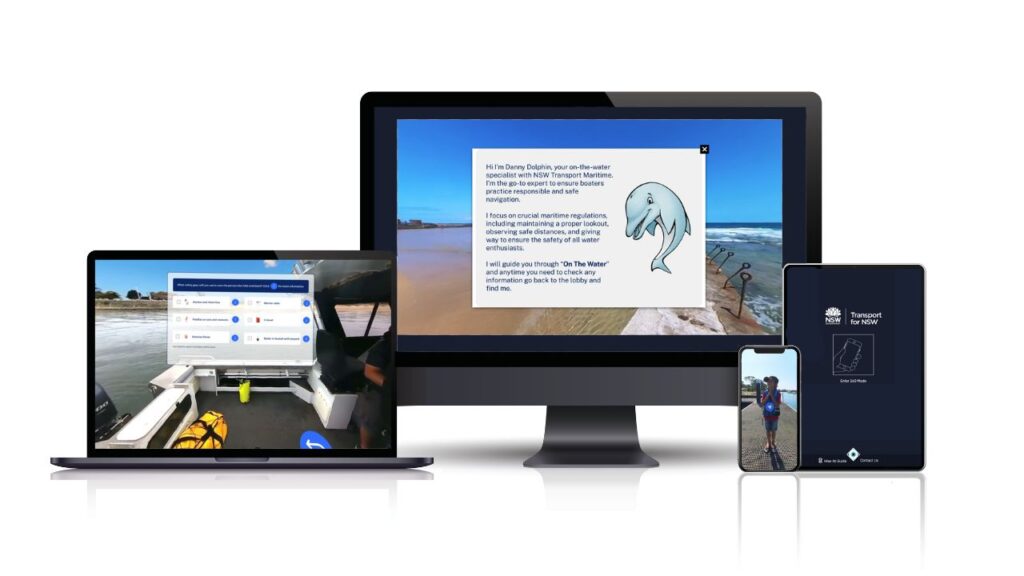
Created in collaboration with NSW Marine and VRTY.io, this online teacher resource is designed to make boating safety education engaging and impactful. Equip your students with essential safety knowledge through an interactive 360-degree experience and 6 structured lesson plans tailored for the NSW Stage 3 PDHPE curriculum.
This resource supports the Boating Safety Education Program for schools, educational institutes, Scouts and Guides across NSW. To find out more about this program or to book a Boating Education Officer visit, click below.
HOW TO USE THIS RESOURCE
The 360º Boating Safety Project and Lesson Plans are designed to provide flexible options for bringing boating safety education into your Stage 3 curriculum. There are two ways you can utilise this resource:
1. Independent Use of Project and Lesson Plans
- Review and Explore the 360º Project: Familiarise yourself with the 360º Boating Safety experience to understand how it can support and engage your students. Have your students view and experience the project.
- Select Relevant Lessons: Choose from the six provided lesson plans that best meet your teaching objectives and align with your students’ needs.
- Follow Lesson Instructions: Each lesson plan includes detailed instructions, learning outcomes, and interactive activities to facilitate effective learning.
- Implement at Your Own Pace: Integrate the lessons into your schedule as it suits your curriculum planning.
2. Integration with NSW Marine Boating Education Officer (BEO) Visit
- Pre-Visit Preparation: Use the 360º Boating Safety content to introduce key concepts before a BEO visits your school. This primes students for a more meaningful engagement during the session.
- Supplement During the Visit: Enhance the BEO experience by incorporating the 360º resources as supplementary material or as an alternative activity in case of wet weather.
- Post-Visit Extension: Reinforce and extend learning after the BEO visit by revisiting the 360º content and lesson plans, solidifying students’ understanding of boating safety.
What’s Included
1. Immersive 360-Degree Boating Safety Project
Take your students on a virtual boating adventure, aligned with the NSW Stage 3 PDHPE curriculum! This interactive tool allows students to explore boating environments, identify potential hazards, and learn key safety tips in a fun, immersive and interactive way.
How it helps:
- Brings real-world scenarios into the classroom.
- Builds confidence and awareness around boating safety.
- Encourages active learning through exploration.
2. Ready-to-Use Lesson Plans (Suitable for Stage 3)
Supplement your teaching with 6 structured lesson plans, each with a simple learning activities that goes along with each section of the 360º Boating Safety Immersive Experience. They are all linked to NSW Stage 3 PDHPE Curriculum. Choose the lesson plan that suits your classroom needs and get started today!
Each lesson plan includes:
- Clear Objectives: What your students will achieve.
- Step-by-Step Instructions: Simple to follow, even if you’re new to boating safety.
- Downloadable Activities: Ready for use in the classroom or for homework.
Using 360º Content as a Text For Learning
Transform your classroom learning with immersive 360-degree content about boating safety, treating it as a dynamic and interactive text to inspire deeper engagement and critical thinking. Here are some tips which provide simple, practical steps to plan, prepare, and deliver meaningful 360º learning experiences. From content aligned with NSW Curriculum Stage 3 PDHPE to facilitating reflection and creative extension activities, you’ll have everything you need to maximise the benefits of this engaging tool.
Helpful Tips:
1. Make Sure to Plan Ahead
- Identify Learning Outcomes: Align 360-degree content with your curriculum goals. Consider how it supports critical thinking, creativity, or understanding key concepts.
- Select Relevant Content: Choose 360-degree experiences that are engaging, age-appropriate, and relevant to your subject area.
2. Prepare the Classroom
- Test the Technology: Ensure devices (tablets, devices or laptops) are charged and working. Test the 360-degree content beforehand.
- Set Expectations: Explain the activity to students, including goals, behaviour expectations, and how to handle the equipment responsibly.
3. Introduce the Content
- Context Matters: Provide background information about the VR experience. Share key vocabulary or questions students should think about during the activity.
- Learning Focus: Guide students to view the 360-degree experience critically, like they would with a traditional text, focusing on “What does this teach us?”
4. Facilitate the Experience
- Engage Actively: Move around the room to ensure students are engaged and using the technology appropriately.
- Encourage Note-Taking: Ask students to jot down observations, key ideas, or questions that come to mind during the 360-degree experience.
5. Reflect and Discuss
- Debrief as a Class: Facilitate a discussion about what students observed and learned.
- Connect to Learning Goals: Help students analyse how the 360-degree content relates to the topic or text they are studying.
- Compare Perspectives: Encourage students to consider how immersive learning differs from reading or watching traditional texts.
6. Create and Extend
- Student Projects: Allow students to demonstrate their understanding by creating their own 360-degree experiences or using the content as inspiration for creative projects.
- Cross-Curricular Connections: Tie 360-degree content to multiple subject areas (e.g., geography, history, science).
Quick Reminders
- Always supervise the use of 360-degree equipment.
- Provide options for students who may feel disoriented or uncomfortable in 360-degree environments.
- Encourage students to reflect critically on the 360-degree content, just as they would with written texts.
By treating 360-degree content as a dynamic and interactive text, you can foster deeper engagement, critical thinking, and creativity in your classroom.